
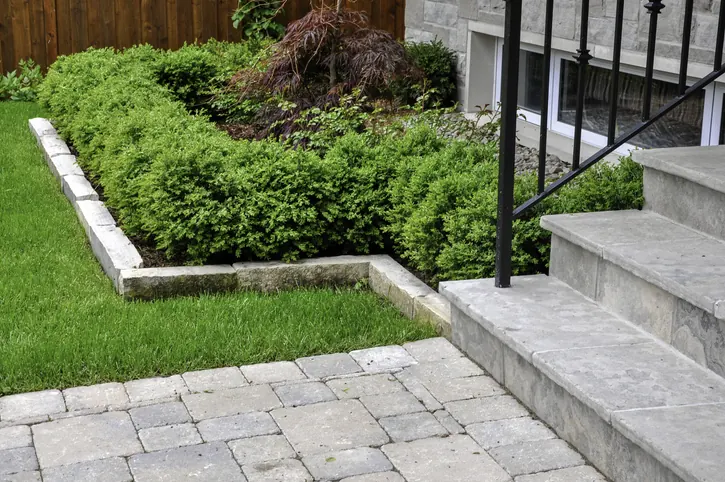
Concrete and masonry done like it used to be done.
Poured concrete, block, brick and stone work — stoops, steps, footings, piers and decorative masonry done by real masons.
What this includes
Concrete and masonry are the bones of any outdoor project. We pour stoops, footings and slabs to code, lay brick and block plumb and level, and finish stone veneer with tight joints and clean lines. Every pour gets proper rebar, the right mix, and full curing time.
- Concrete stoops, steps, slabs and footings
- Block walls, piers and column work
- Brick and stone veneer on stoops and chimneys
- Repair of cracked, settled or spalling concrete
- Decorative stamped and broom-finish concrete
How we work
- 1
Forming & rebar
We dig to firm subgrade, form straight, tie rebar on chairs, and double-check elevations before any concrete shows up.
- 2
Pour & finish
Right mix for the job, screeded, floated and finished by hand. Control joints cut before they crack on their own.
- 3
Cure & seal
Covered and kept damp through initial cure; sealed where appropriate to protect against salt and freeze-thaw.
Concrete done to spec, not to the bare minimum
Concrete is unforgiving — once it’s placed, finishing window is measured in minutes and mistakes get poured into permanent record. We pour a 4,000 PSI air-entrained mix (essential for Northeast freeze-thaw resistance) for almost all exterior flatwork, with rebar on chairs (not laid on grade), proper control joints cut before random shrinkage cracks decide for us, and a hand-troweled or broom finish to spec.
Footings for stoops, walls and piers are dug below the local frost depth (42" in Nassau County) and inspected for firm subgrade before any concrete is ordered.
Brick, block and stone masonry
Brick stoops, brick veneer chimney repairs, concrete block foundation walls and piers, stone veneer on stoops and walls — all laid by masons who do it as their primary trade, not by landscapers swinging a trowel for the first time that week.
Mortar is mixed to match the original where we’re tying into existing work, joints are tooled consistently, and weep holes are placed in veneer assemblies so trapped moisture has an exit. On historic brick repointing, we cut joints to the right depth and use a lime-rich mortar that won’t spall the original brick faces.
Concrete repair, replacement and decorative finishes
Cracked stoops, settled walkways, spalling driveway aprons, deteriorated steps — we assess whether repair is realistic or whether tear-out and repour is the better long-term value. Cosmetic cracks can be routed, sealed and resurfaced; structural cracks or significant settlement usually mean replacement.
On decorative work, we install stamped concrete in slate, ashlar slate, wood-plank and cobble patterns, integrally colored or with color hardener and release agent. Stamped concrete gets the same air-entrained mix and proper joint spacing as standard flatwork.
Concrete & Masonry — questions we hear most
Related services
Hardscaping
Pavers, walkways, patios, retaining walls and outdoor steps engineered to stay flat through Long Island freeze-thaw winters.
Read about HardscapingPaver Driveways & Walkways
Driveway and walkway paving in concrete pavers, bluestone and Belgian block — properly based to handle vehicles and frost.
Read about Paver Driveways & WalkwaysRetaining Walls
Engineered segmental and natural-stone retaining walls that hold grade, manage water, and turn slopes into usable yard.
Read about Retaining WallsReady for a free on-site quote?
Call or text Greatness Landscaping — most quotes scheduled within a few days.